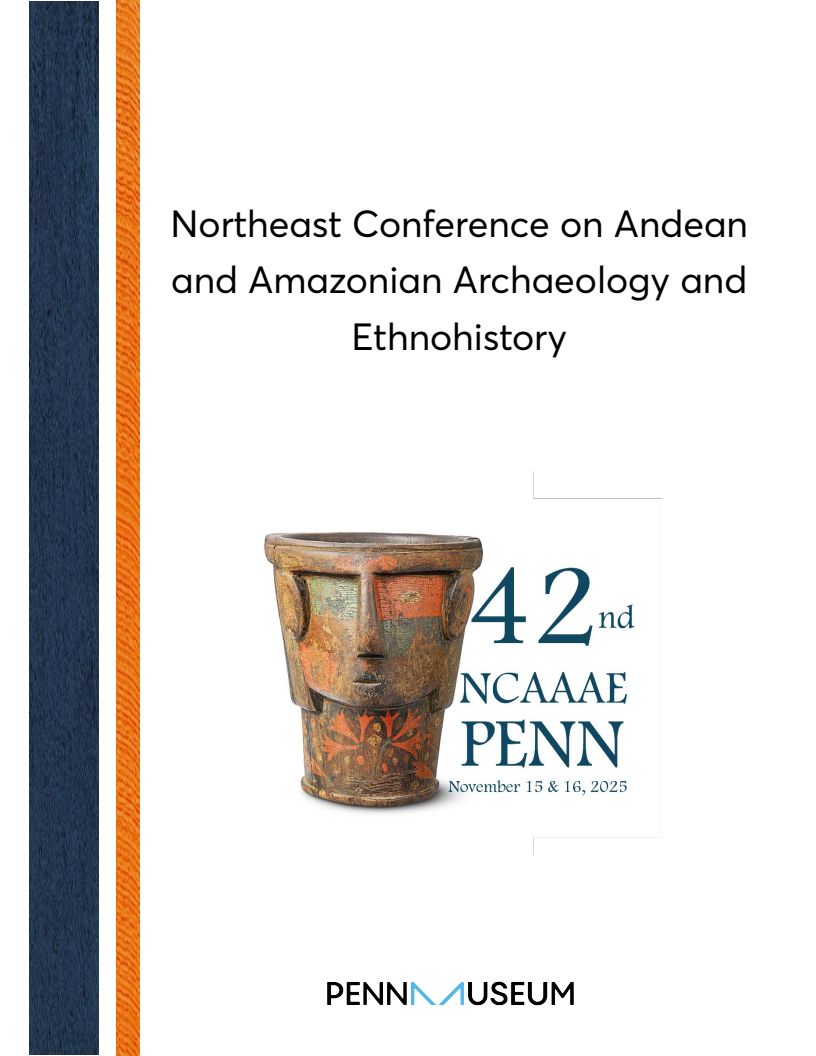
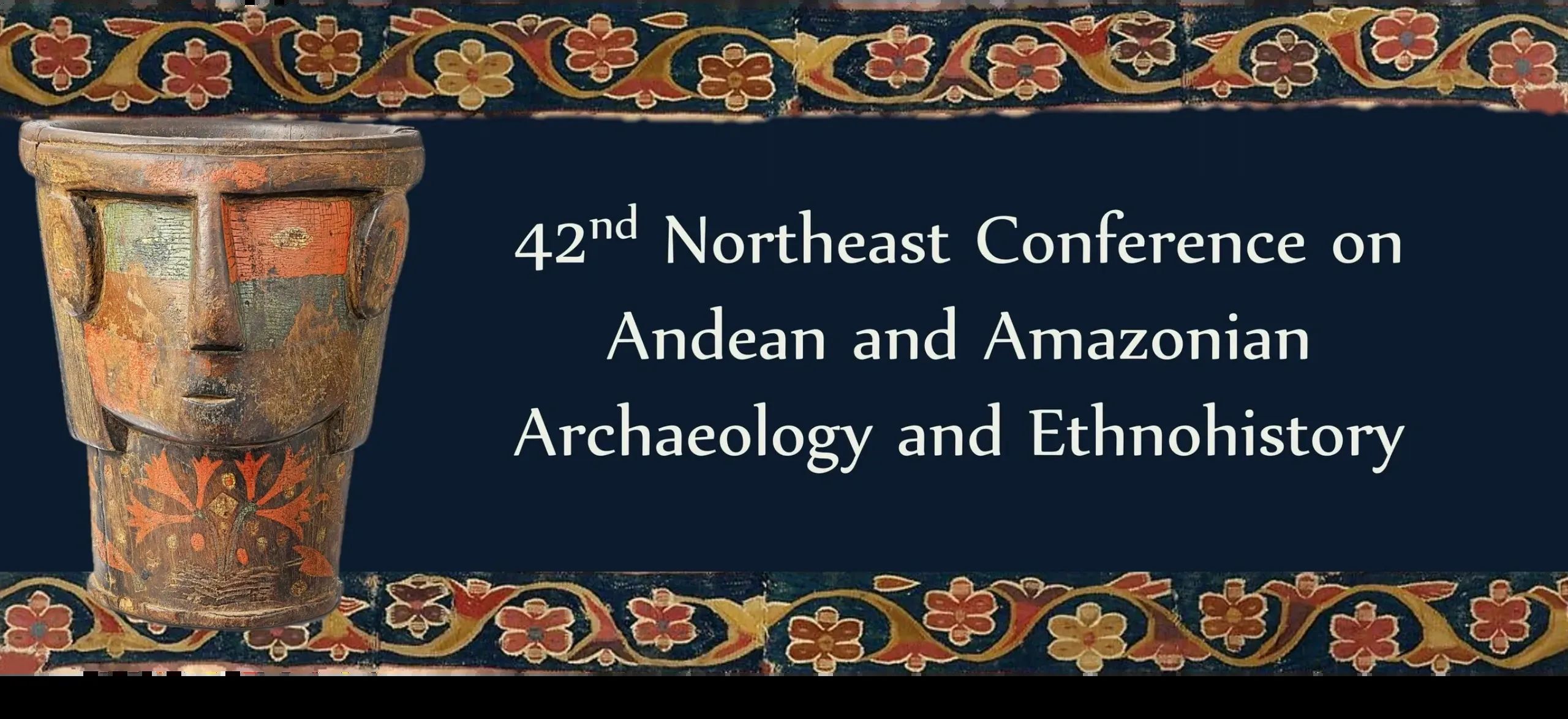
42nd Northeast Conference on Andean and Amazonian Archaeology and Ethnohistory
15–16 November 2025
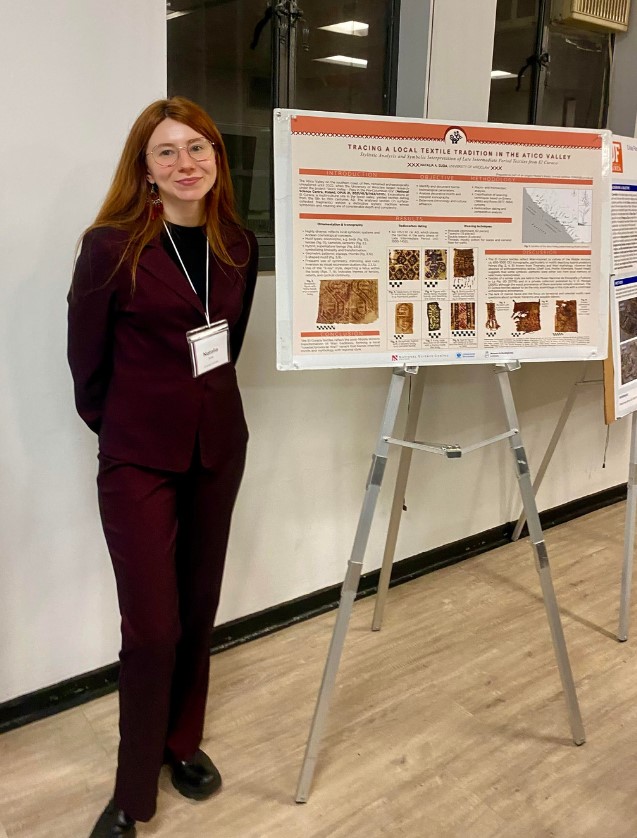
Between 13 and 21 November 2025, our colleague, Natalia Suda, a second-cycle (Master’s degree) student of archaeology, stayed in the United States, where she took part in the conference held in Philadelphia devoted to Andean archaeology and ethnohistory – the 42nd Northeast Conference on Andean and Amazonian Archaeology and Ethnohistory. She presented the results of analyses of textile materials obtained during research conducted by the Institute of Archaeology, University of Wrocław, in southern Peru. The title of her paper was: Tracing a local textile tradition in the Atico Valley: stylistic analysis and symbolic interpretation of Late Intermediate Period textiles from El Curaca.
Following the conference, at the invitation of The Metropolitan Museum of Art in New York, Natalia undertook a research stay in the museum’s Department of Textile Conservation. During her visit, she had the opportunity to familiarise herself with the latest equipment used for the analysis and conservation of historic textiles. She also gained insight into the processes involved in preparing museum textiles for exhibition and their subsequent storage. It should be noted that this was not Natalia’s first research visit to institutions in the United States. In February 2025, she participated in a course organised by the Fowler Museum, University of California, Los Angeles, devoted to the analysis of pre-Columbian textiles from Peru, entitled Analysis of Peruvian Archaeological Textile Structures.
At present, Natalia is staying in southern Peru, where she is taking part in the international research project Atico Valley-Peru in the pre-Columbian era. Development and intercultural relations between the communities of the mountain and desert area of thesouthern of Peru. The research, directed by Professor Józef Szykulski of the Department of Non-European Archaeology, Institute of Archaeology, University of Wrocław, has been conducted in Peru since 2022 as part of a grant from the National Science Centre (NCN), OPUS 21 – 2021/41/B/HS3/03115.